
Fight Food Waste:
Consumer Fridge Behavior and Waste Reduction of Red Meat
Funding Partner: End Food Waste Australia (previously Fight Food Waste Cooperative Research Centre)
Chief Investigator (CI)
Project Timeline: 2021 onwards. This is an ongoing project.
End Food Waste Australia
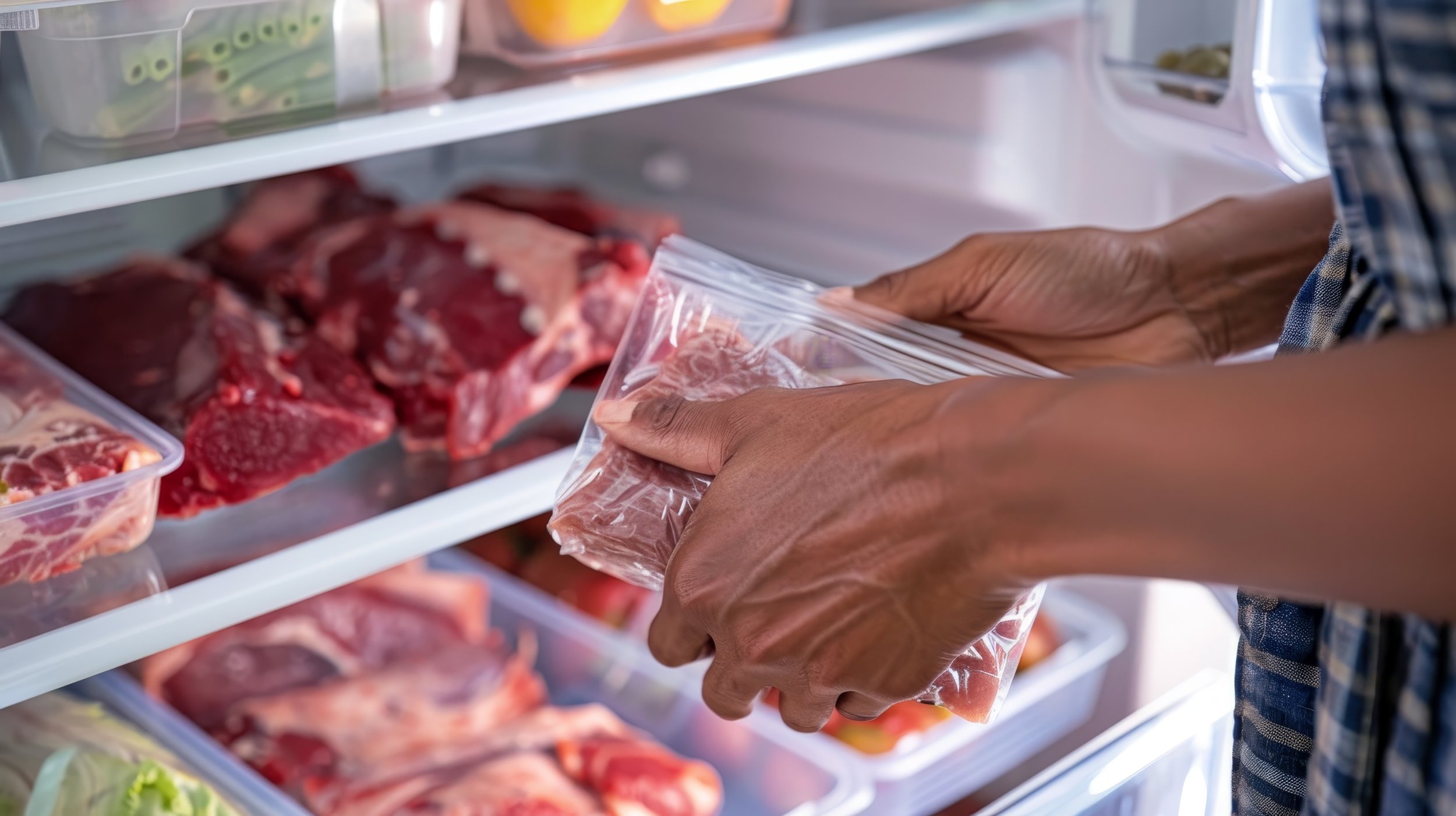
This ongoing research project investigates how red meat waste can be reduced in Australian households by examining the relationship between consumer behaviour, household refrigeration practices and food storage conditions. Despite the significant environmental and economic impacts of food waste, red meat continues to be discarded at high rates across Australia. Estimates suggest that approximately 155,000 tonnes of meat are wasted within the cold food chain before reaching consumers, while more than one in four Australian households throw away meat each week. Reducing this waste has the potential to deliver substantial environmental benefits by lowering greenhouse gas emissions, reducing pressure on land and water resources, and helping households save money.
Research & Scope
The project seeks to better understand why red meat is wasted in the home by combining technical data on refrigerator performance with insights into everyday household practices. It explores how consumers purchase, store, prepare and dispose of meat, and how these behaviours interact with factors such as fridge temperature, storage conditions and seasonal changes. By investigating both the technological and behavioural dimensions of food storage, the research aims to identify practical opportunities for reducing avoidable waste.
Using a mixed-methods approach, the study collects real-time data on refrigerator temperature and electricity use in Australian households alongside in-depth interviews with participants about their meat purchasing, storage, consumption and disposal habits. Data are collected across different seasons to understand how changes in weather, household routines and food practices influence refrigeration performance and meat wastage throughout the year.
Forecast Impact
The project will generate new evidence on Australian consumers' refrigeration practices and provide a deeper understanding of the factors contributing to household meat waste. The findings are expected to inform retailers, policymakers and industry by improving knowledge of how meat is stored and consumed in homes, supporting more accurate shelf-life management and reducing unnecessary product markdowns and waste throughout the supply chain. For households, the research will contribute to clearer guidance on safe food storage and freshness, helping consumers reduce waste while supporting health and wellbeing.
In the longer term, the project aims to translate its findings into practical interventions and consumer education initiatives that encourage more sustainable food storage and consumption practices. By reducing avoidable red meat waste, the research has the potential to contribute to Australia's climate and sustainability goals while supporting more resource-efficient and resilient food systems.
Partner Organisations include Meat and Livestock Australia.
Partner Researchers at RMIT University:
Bhavna Middha
Cecily Maller
Nooshin Torabi
Simon Lockrey
Peter Stasinopoulos
Nirajan Shiwakoti
Related Publications
New research program to unlock more value from every crop: One million tonnes of fruit and vegetables never makes it off farm – we’re leading a new research program to change that.
What happens behind the fridge door: Understanding how household food waste occurs