
Mapping fuel poverty around the world
Hosted by Royal Geographical Society
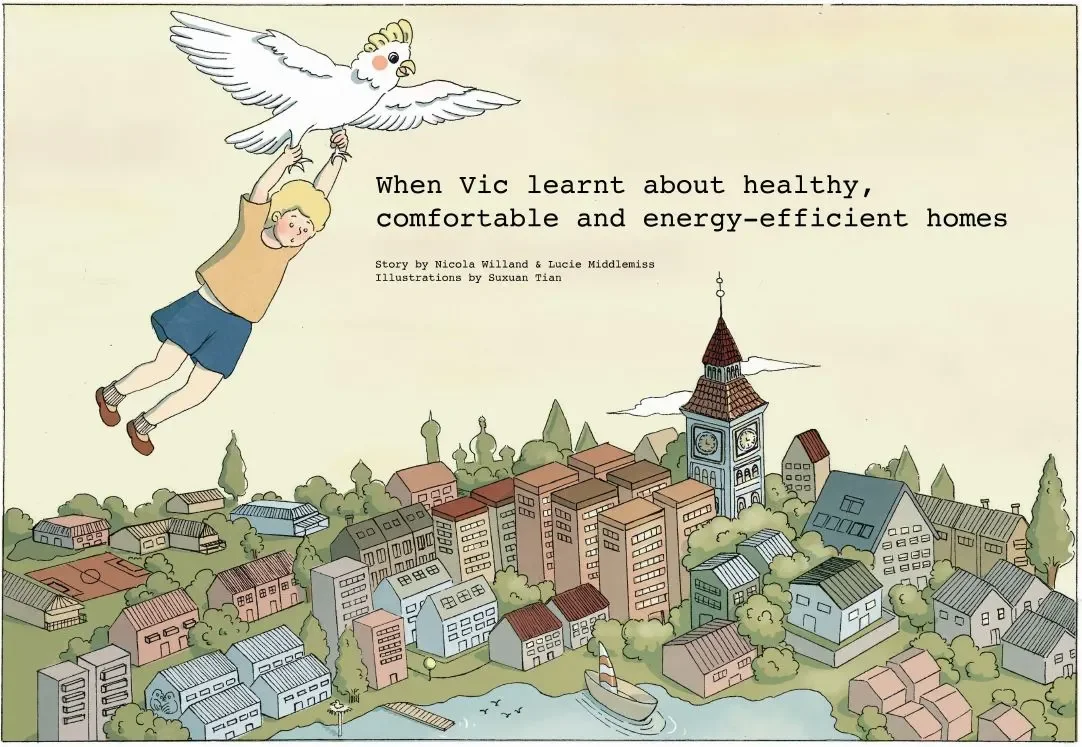
The comic is free to use, there is a low resolution version and the additonal files can be downloaded for free.
I found myself in London last August, in a room that stretched a lot further than its four walls. Nicola Willand, Sara Robertson, Sara Vahaji and I had spent months putting together a panel session for the Royal Geographical Society's international conference, and by the time we got there, "in the room" meant something different than usual — London in person, Melbourne on a live link, and a scatter of presenters joining from wherever they happened to be that day.
The idea behind it was simple, even if the problem it addressed wasn't. Fuel poverty doesn't look the same everywhere, and most researchers only ever see the version of it that shows up in their own country's data. We wanted to put those versions side by side.
So we built a hybrid session around seven Engaging in Energy Poverty in Early Career (EPEC) grant recipients, each with five minutes to lay out their work before the floor opened to questions. I presented my own project — on the fuel and food poverty nexus — from London, standing in the same room as Nicola and Sara Vahaji. Sara Robertson joined from Melbourne. The rest of the panel came in online: Daniel Torrego on summer energy poverty among older adults in Madrid, Alejandra Cortes on energy culture in southern Chile, Antonella Mazzone on cooling poverty in Rio de Janeiro, Irene González Pijuan on children confronting energy poverty in the UK, Nino Antadze on lived experience in Georgia. Seven projects, five continents, one thread running through all of them.
While our panel ran in London, something else was happening in Melbourne. RMIT hosted a networking event — Putting Energy Justice on the Map — that pulled together researchers, consumer advocates and civil society groups working on energy injustice in Australia. It opened with the launch of a comic book, When Vic learnt about healthy, comfortable and energy-efficient homes, written by Nicola with Lucie Middlemiss and illustrated by RMIT PhD student Suxuan Tian — a gentle, visual way into a subject that's usually anything but gentle. Refreshments, conversation, then the room turned toward the screen as the live link opened onto our panel in London.
By the end of it, the session had done what we'd hoped: reached across disciplines, sectors and borders, and put our EPEC fellows' work in front of an audience that wouldn't otherwise have crossed paths with it. New connections came out of it — the kind that tend to turn into the next round of collaborations.
We're already looking ahead to what strengthens this network next.