
provocation: What will we eat in the future?
As climate change, population growth, and ecological collapse reshape how we produce and consume food, we need to think outside the (lunch) box to find solutions.
The dynamic panel, hosted by ABC presenter Hilary Harper, discussed food systems, waste, packaging experts and inventive cooks as they explore what we'll be eating in the future, and how food security, food sovereignty, nutrition and wellbeing are interconnected and dependent.
How can we eliminate food waste, recycle and extend food life, and secure food systems in the face of the climate emergency, a plastics dependence, and a tumultuous water-energy-food nexus? What does the future of food taste and smell like and who gets to decide what's put on our plates?
We came together to learn what's simmering in food science, what's sizzling in food and packaging innovation, and rethink the main course on the dinner plates of the future.
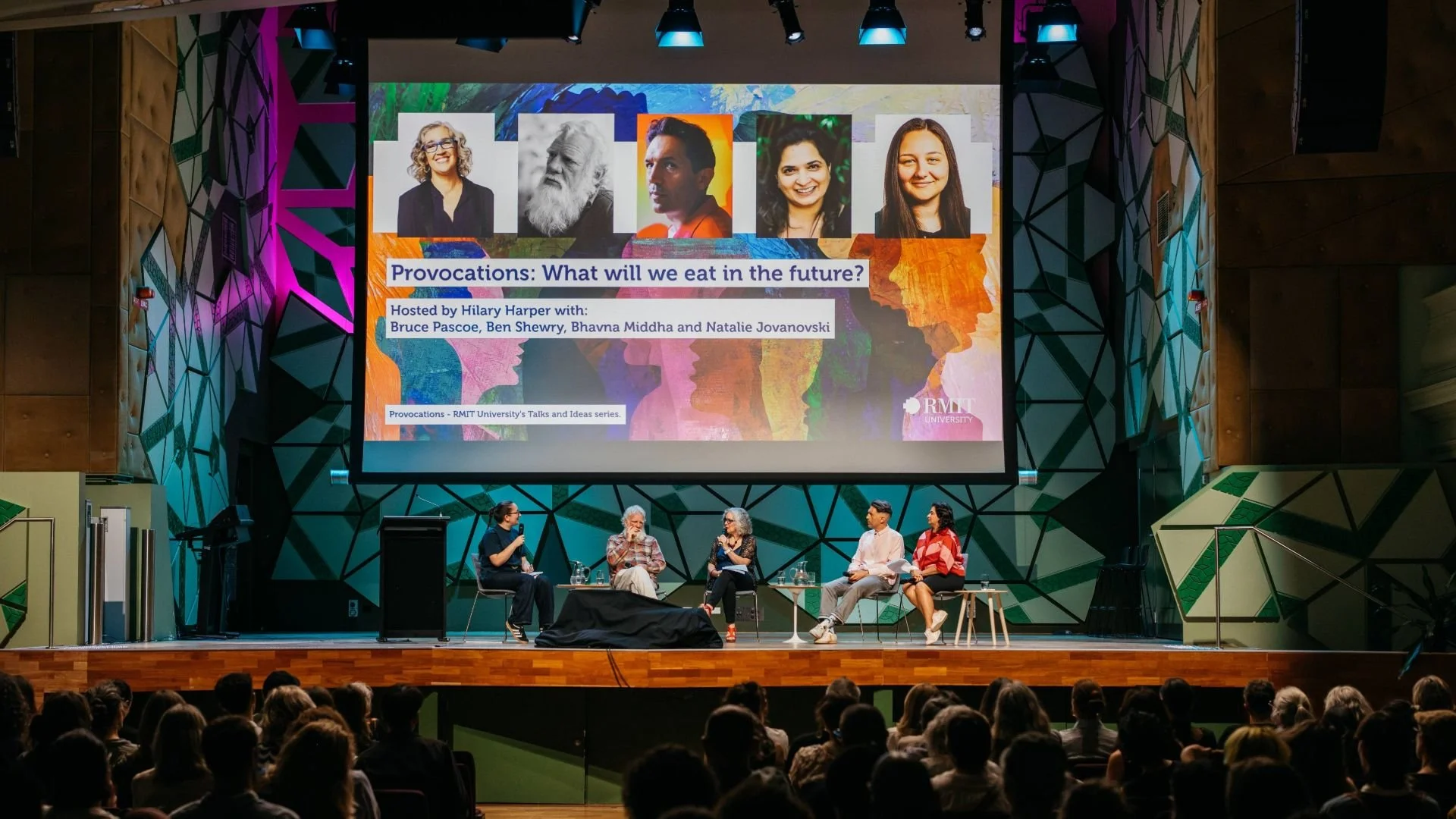
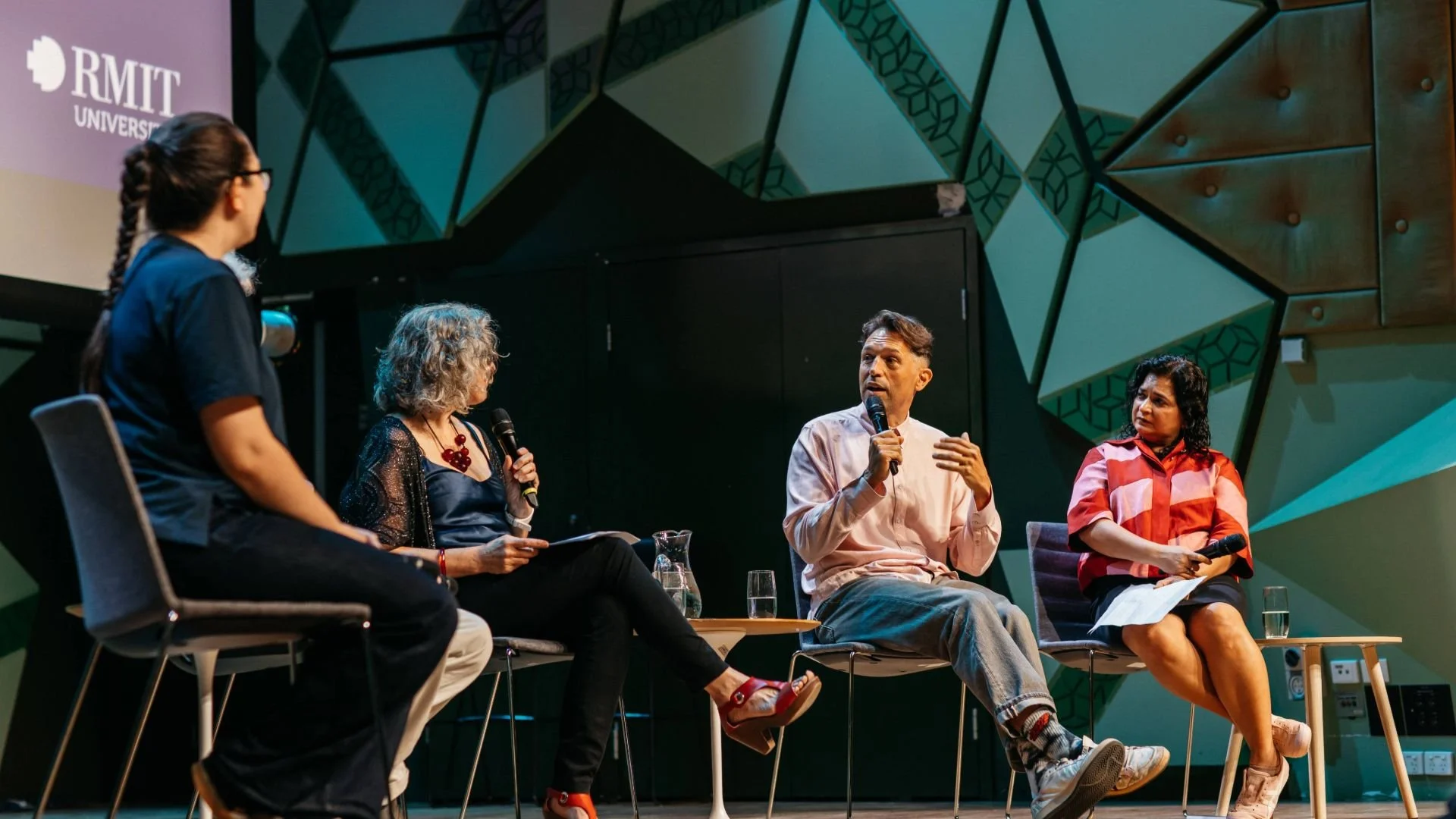
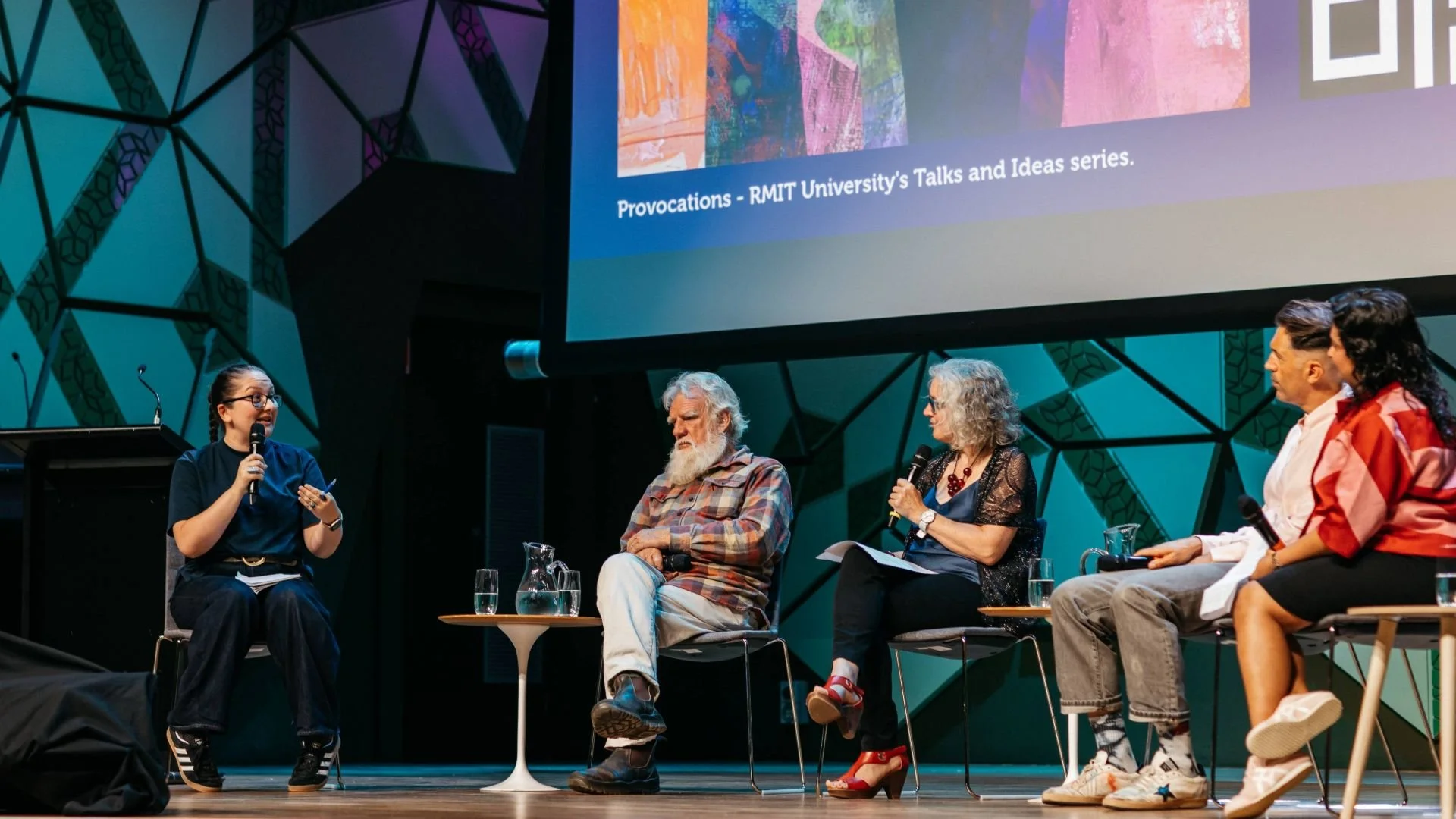
Hosted by RMIT University’s College of Design & Context as a part of their recent flagship public talks and ideas series, ‘Provocations’.
Introduced by Associate Deputy Vice Chancellor, Engagement, Professor Naomi Stead, hosted by RMIT alumni and ABC presenter Hilary Harper, the panel featured multi-award-winning author and Aboriginal farmer, Bruce Pascoe, internationally renowned chef Ben Shewry, RMIT health sociologist Natalie Jovanovski and myself, RMIT sustainable consumption scholar Bhavna Middha and .
Bruce Pascoe shared his insights on traditional Aboriginal methods of growing and harvesting produce, using these techniques for land regeneration on degraded forest land, saying: “reestablishing grasslands has helped to stabilise the soil, slow down water runoff and refill the dams.”
Restaurateur, Ben Shewry, challenges customer’s expectations of ‘acceptable’ fine-dining menus, serving native insects and meats like emu, wallaby and kangaroo.
“Kangaroos are one of the most amazing meats to cook with, and Australia has so many delicious insects, like green and black ants – all completely sustainable, naturally existing without fertilisers, additives or excessive water," he said. “It's all absolutely, vibrantly, and astoundingly delicious.”
Research undertaken by RMIT’s Natalie Jovanovski highlights the barriers facing marginalised groups when making decisions about nutrition.
Speaking to her research, she said “low-income single parents expressed that their welfare payments were just not enough to feed their children a nutritional diet, let alone themselves.”
“We found that the health of low-income single mothers is affected because they’re unable to access and afford nutritious food,” she added.
I challenged society’s tendency to lay blame on consumers for food waste. Instead, arguing external societal factors all combine to impact what lands on our plates and in our mouths.
“Putting the responsibility of food waste on households and individuals is something that we're doing wrong. Food waste starts when it's produced, in the quantity its produced, the way it's wholesaled, provisioned, and then sold to consumers,” she said.
“I think there is something to be said about changing our lifestyles, without making it an individual’s behavioural issue to change. We have to think about how we can change behaviour at a societal level.”